r-Tms (Repetitive Transcranial Magnetic Stimulation) in the treatment of tinnitus

rTMS for Tinnitus
Repetitive Transcranial Magnetic Stimulation in the Management of Tinnitus
Advanced Diagnostic Evaluation • Personalized Treatment Planning • Evidence-Based Medicine
(1).jpg) Tinnitus is not a disease by itself but a symptom that may arise from various disorders affecting the auditory system or related neural pathways. Because the underlying mechanisms differ from one patient to another, no single treatment is effective for every individual.
Tinnitus is not a disease by itself but a symptom that may arise from various disorders affecting the auditory system or related neural pathways. Because the underlying mechanisms differ from one patient to another, no single treatment is effective for every individual.
One of the treatment options that has attracted increasing scientific interest over the past two decades is Repetitive Transcranial Magnetic Stimulation (rTMS). This non-invasive neuromodulation technique has been investigated in numerous clinical studies for patients with chronic tinnitus, particularly those who have not achieved satisfactory improvement with conventional management.
At our clinic, rTMS is not used as a standalone treatment, but as part of a comprehensive diagnostic and individualized treatment program designed according to each patient's clinical findings.
What is rTMS?
Repetitive Transcranial Magnetic Stimulation (rTMS) is a non-invasive neuromodulation technique that uses rapidly changing magnetic fields to stimulate specific regions of the cerebral cortex.
Unlike surgical procedures, rTMS does not require anesthesia or hospitalization. Magnetic pulses pass painlessly through the scalp and induce small electrical currents within targeted brain tissue, helping to modulate neuronal activity.
Today, rTMS has become an established therapeutic option in several neurological and psychiatric disorders. During the last decade, it has also become one of the most extensively investigated neuromodulation techniques for chronic tinnitus.
Why rTMS May Help Tinnitus
Current scientific evidence suggests that chronic tinnitus is associated not only with the inner ear but also with abnormal activity within the auditory pathways and auditory cortex.
Following hearing loss or other auditory disorders, the brain may undergo maladaptive neuroplastic changes. These changes can increase spontaneous neuronal firing and alter communication between different brain networks involved in hearing, attention and emotional processing.
rTMS aims to modulate these abnormal neural activities and facilitate more physiological brain network function.
Although the exact biological mechanisms are still being investigated, several studies suggest that carefully selected patients may experience a reduction in tinnitus severity following treatment.
Our Clinical Philosophy
One of the most important principles of our clinic is that successful tinnitus management begins with an accurate diagnosis.
Rather than applying the same treatment protocol to every patient, we first attempt to determine the possible mechanisms contributing to the individual's tinnitus.
Because tinnitus may originate from different parts of the auditory system—or may even be associated with vascular, neurological, somatosensory or psychological factors—our evaluation focuses on identifying the underlying causes whenever possible.
Only after completing the diagnostic assessment do we determine whether rTMS is an appropriate treatment option.
Comprehensive Diagnostic Evaluation
Each patient undergoes an individualized assessment that may include:
- Comprehensive ENT examination
- Detailed medical history
- High-frequency audiometry
- Speech audiometry
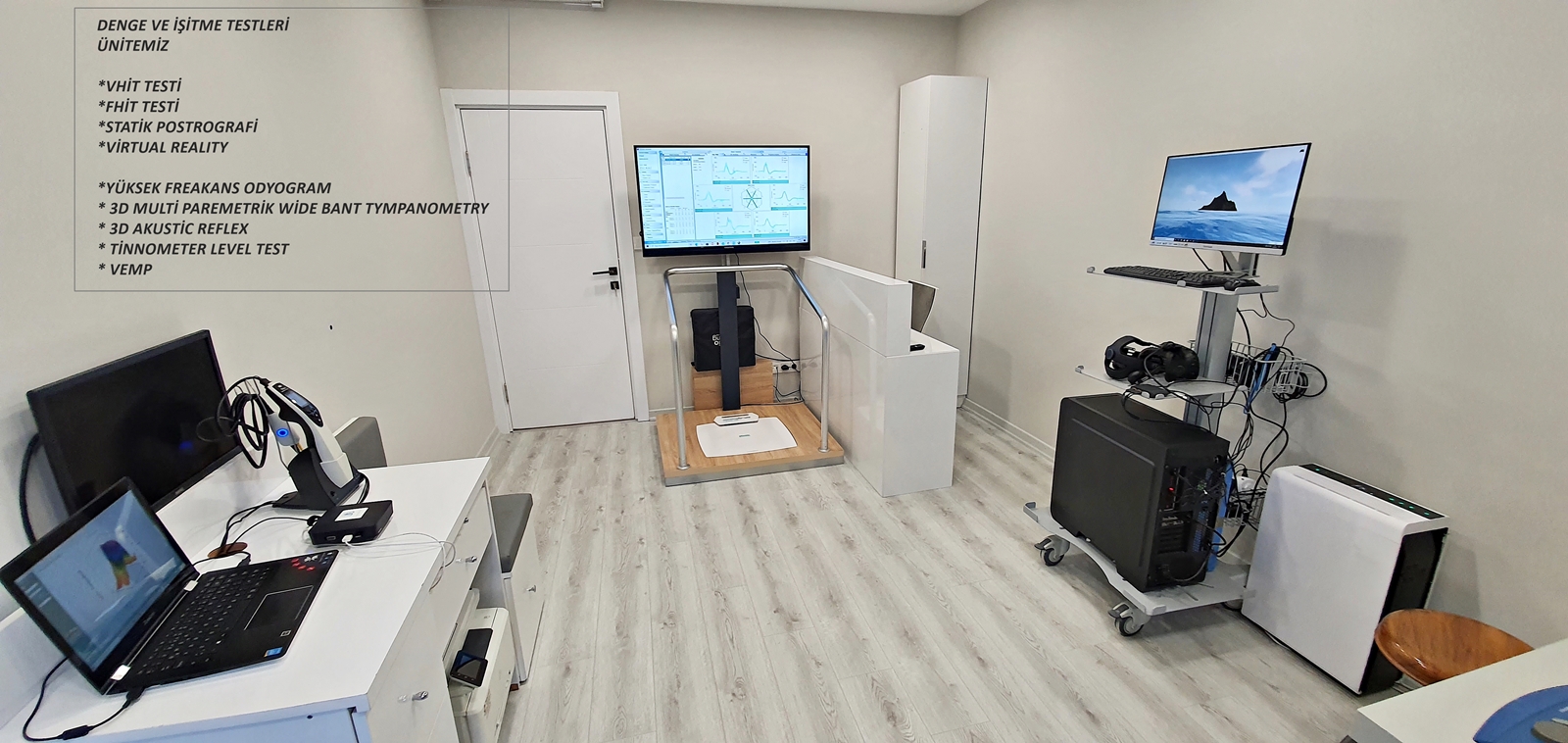
- Wideband 3D tympanometry
- Three-dimensional acoustic reflex measurements
- Eustachian tube function testing
- Tinnitus psychoacoustic assessment using the MedRx Tinnometer
- Laboratory evaluation when indicated
- Advanced radiological imaging when clinically necessary
- Vestibular assessment in patients with dizziness or balance disorders
Additional vestibular investigations may include:
- Video Head Impulse Test (vHIT)
- Functional Head Impulse Test (fHIT)
- Static posturography
- Virtual reality-based vestibular assessment
When clinically indicated, advanced functional MRI analysis may also contribute to treatment planning.
Individualized Treatment Planning
Every patient receives an individualized treatment plan.
Depending on clinical findings, rTMS may be combined with other evidence-based treatment options including:
- Medical treatment
- Hearing rehabilitation
- Sound therapy
- Intratympanic therapies
- Vestibular rehabilitation
- Lifestyle modification
- Psychological support when appropriate
This individualized approach aims to address the specific mechanisms contributing to tinnitus rather than applying a uniform protocol.
Scientific Evidence
Over the last twenty years, hundreds of scientific publications have investigated rTMS for chronic tinnitus.
Although study outcomes vary because of differences in patient selection and treatment protocols, systematic reviews suggest that selected patients may experience clinically meaningful improvement.
Current evidence indicates that patient selection, accurate diagnosis and individualized treatment protocols are among the most important factors influencing treatment outcomes.
Safety
rTMS is generally considered a safe and well-tolerated non-invasive procedure when performed by appropriately trained healthcare professionals.
However, treatment may not be suitable for every patient.
Contraindications and precautions include:
- Certain implanted electronic medical devices
- Some intracranial metallic implants
- Uncontrolled epilepsy
- Individual medical conditions requiring specialist evaluation
A detailed medical assessment is performed before treatment to determine suitability.
Our Approach
We believe that technology alone does not determine success.
Advanced diagnostic equipment, scientific knowledge and decades of clinical experience should work together.
Our goal is not simply to provide rTMS treatment, but to understand why tinnitus has developed and to design the most appropriate management strategy for each individual patient.
Important Information
rTMS is one of several evidence-based treatment options that may be considered for selected patients with tinnitus.
Treatment outcomes vary between individuals and depend on many factors, including the underlying cause of tinnitus, hearing status, duration of symptoms and accompanying medical conditions.
For this reason, no treatment can guarantee improvement for every patient. Management decisions should always be based on a comprehensive clinical evaluation and individualized treatment planning
.